Friday, 23 September 2016

Thursday, 15 September 2016
The Future Of Storage - Flash And Optical


Optical Storage -
Examples of optical storage include CD - ROM, DVD - ROM AND DVD - RAM. These storage devices are all optical because they use a laser in order to store and retrieve data for usage. The laser finds the data required by using lots of small mirrors that direct the laser to specific parts of the disc.BLU-RAY has been leading the way for optical devices in recent years as it offers a high quality picture (1080p), however there has already been advances on optical storage's best outlet, for example video streaming has became increasingly popular, as well as this it can commonly be done at a higher resolution.
Flash Storage -
Examples of flash storage include solid state drives, flash drives and memory cards. The flash form of storage is extremely useful in the modern day as it only uses transistors which can only be on and off - representing 1's and 0's, this means that the transistors can turn on and off very quickly in order to find data faster as it doesn't have to physically locate it. Solid state drives are becoming increasingly used due to their supreme speed in comparison to HDD's.
Who wins now?
In my opinion, the flash form of storage is much more superior to its competitor - optical. This is because they have much faster read and write times and are more efficient in their method of doing so. However, flash storage is typically more expensive, in the form of SSD's and in the form of memory sticks they are more expensive due to their demand and portability.
The Future -
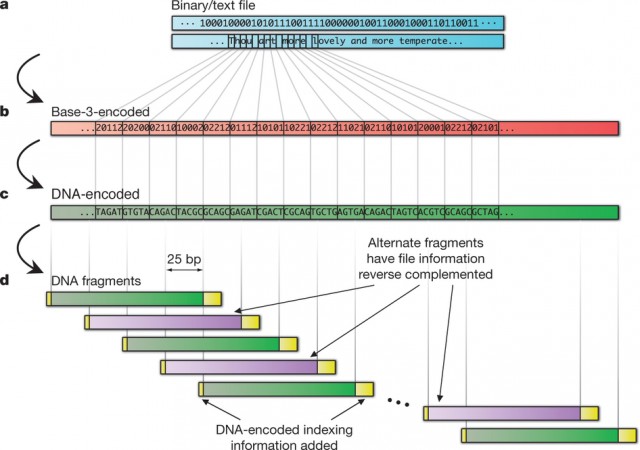
At the moment, flash and optical storage are both extremely relevant to everyday living, however, there are heavy developments to new forms of storage such as DNA storage and atomic storage. DNA storage has already been successfully tested, with the method shown below. This storage is extremely expensive, however they can store up to 1 billion TB in a gram of DNA. However, a big problem on the large scale is how to read and write the data from the DNA strands themselves.
Subscribe to:
Comments (Atom)